
Choosing a Board Certified Behavior Analyst in Dubai
06/11/2026

If a child follows instructions, reacts to their name, and appears to understand familiar language but uses very few spoken words, parents may have questions about the difference between understanding language and expressing it.
The short answer is that understanding language and speaking language are two separate skills. A child can develop one ahead of the other. But that gap alone does not explain why, and the reason behind it matters for figuring out what, if anything, needs to happen next.
These two terms come up a lot in developmental conversations, and they describe genuinely different processes.
Receptive language is a child’s ability to take in and understand language. When a child follows directions, reacts to questions, or clearly understands what is being said to them, that is receptive language at work, regardless of how many words they are producing.
Expressive language is a child’s ability to communicate outward. This includes spoken words, but it also covers gestures, pointing, facial expressions, and any other deliberate attempt to send a message to another person.
Understanding language and using spoken words are related but different communication skills. A child may seem to understand familiar words and instructions while using few spoken words. If you are concerned about your child’s communication development, speak with their doctor about developmental screening and whether further evaluation is needed. The CDC explains what to do if you have concerns about your child’s development.
A child’s visible understanding is helpful, but it does not explain why they are not talking or remove the need for assessment when expressive language is significantly behind expectations for their age.
There is more than one reason a child’s expressive language can lag behind receptive language, and identifying which situation applies to a specific child requires a clinical look rather than a process of elimination at home.
An expressive language delay means a child’s ability to produce and use language is developing more slowly than expected for their age, even when receptive language appears typical. An expressive language delay can help explain why a toddler understands instructions clearly but uses far fewer words than peers the same age. Expressive language delay can occur without any broader developmental difference, and speech and language therapy may be recommended to help a child develop communication skills.
A child with hearing difficulties may respond to familiar routines and visual cues, so apparent understanding does not rule out a hearing concern. A hearing test is often included in a speech-language evaluation because hearing difficulties can affect speech and language development. Discuss hearing assessment with your child’s doctor if you have concerns.
Some children understand language well and have plenty to say but face difficulty with the physical production of speech sounds. This is different from a language delay. A child with a speech sound disorder may attempt to communicate but produce speech sounds incorrectly or have difficulty being understood. These two presentations, a language delay and a speech sound disorder, look different clinically and require different approaches.
In some children, the gap between understanding and speaking is one part of a broader developmental picture that also includes differences in social communication, play, or behavior. Autism spectrum disorder is one context in which a child may show relatively stronger receptive language alongside more limited expressive communication. The key point here is that no single behavior, including understanding language without speaking, confirms or rules out autism on its own. A full developmental assessment looks at the complete picture.
Milestones are guides, not fixed rules, and children develop at different rates. Families can use the CDC’s age-based developmental milestones as a general point of reference.
According to the CDC, by 15 months most children try to say one or two words besides “mama” or “dada,” follow directions given with gestures and words, and point to ask for something or get help. By 18 months, most children try to say three or more words besides “mama” or “dada” and follow simple one-step directions without gestures. See the CDC’s communication milestones by 15 months and by 18 months.
By age 2, most children say at least two words together, such as “More milk.” The CDC recommends talking with your child’s doctor if they are not meeting milestones, have lost skills they previously had, or you have other developmental concerns. See the CDC’s milestones by age 2 and its guidance for parents concerned about their child’s development.
A child who understands language well but falls far short of these expressive language markers by 18 to 24 months is showing a gap worth discussing with a professional, not necessarily a crisis, but something that warrants a proper look rather than continued waiting.
Not every child who is slow to talk needs intervention. Some late talkers do catch up without structured support. The challenge is that from the outside, families cannot reliably tell which category their child falls into, and the distinction matters.
Discussing concerns with a pediatrician is a reasonable first step. A referral for a formal speech and language evaluation by a qualified speech-language therapist is the appropriate next step when:
A developmental consultation can also help families understand the full picture before a formal evaluation, identify whether other concerns are worth assessing alongside speech and language development, and clarify what kind of professional assessment is the most appropriate next step for that specific child.
Not necessarily. Limited spoken language alone does not establish whether a child is autistic.
Some autistic children have significant expressive language delays. Some do not. Some children with expressive language delays have no autism connection at all. And some children with autism understand language well and have a relatively strong receptive language profile alongside more limited or atypical expressive communication.
No single behavior, including a child who understands but does not talk, confirms or rules out autism spectrum disorder. A clinical assessment looks at the full developmental picture, including social communication patterns, play behavior, sensory responses, and the overall developmental history, before drawing any conclusions.
If autism is part of what a family is concerned about alongside their child’s speech, a developmental consultation that looks at the full picture is more useful than trying to interpret one behavior in isolation.
Home strategies do not replace professional assessment when concerns are persistent. But they do create more opportunities for communication during everyday life, which can support children’s development.
None of these replace a professional assessment if concerns are already there. But they do give a child more chances to communicate during the day, and that matters regardless of whether a delay is present or not.
In multilingual families, parents may wonder whether growing up with two or more languages affects speech and language development.
Growing up with two languages does not cause a speech or language disorder. Multilingual children may distribute their vocabulary across both languages, so they may know fewer words in each language when considered separately. Their communication should be considered across the languages they use.
A language disorder can affect a multilingual child’s communication across the languages they use, although language abilities may vary across languages and language domains. A speech-language evaluation should consider the child’s communication skills across their languages rather than assessing only the school language. If a family has concerns about their multilingual child’s communication development, a professional with experience in multilingual development and the UAE family context is better placed to assess the situation accurately than one working from a monolingual framework.
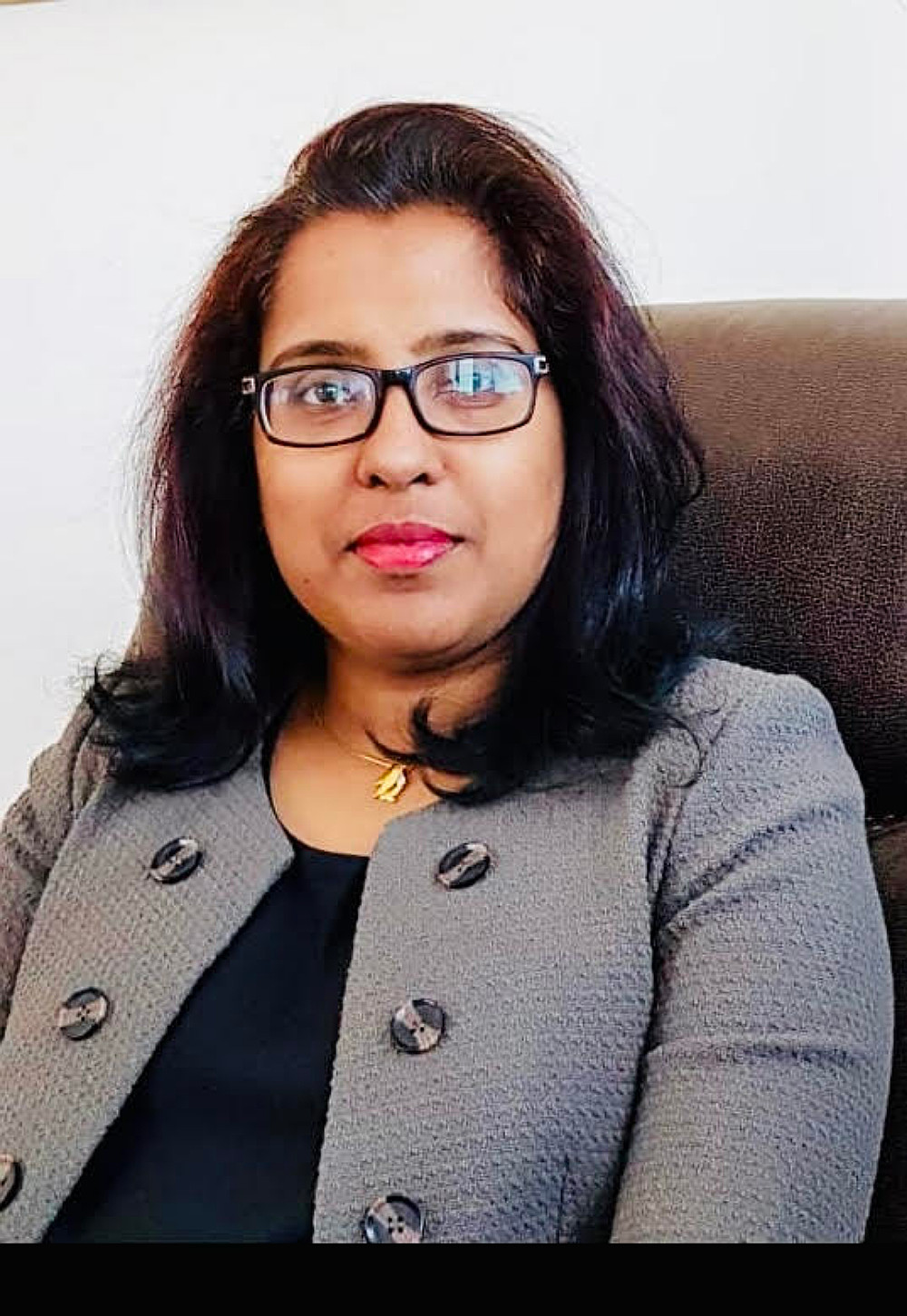
A developmental consultation with Asha Susan Mani, BCBA (USA), looks at the child’s full developmental and communication profile, including the gap between receptive and expressive language, how the child communicates beyond spoken words, behavioral patterns relevant to the developmental picture, and what the family has been observing across different settings at home and at nursery or school.
The consultation does not replace a formal speech and language evaluation by a qualified speech-language therapist. It can help families discuss their concerns, understand whether a formal speech-language evaluation may be appropriate, identify other developmental concerns to discuss with a professional, and consider practical strategies for home and the child’s educational setting.
Families in Dubai can access consultation in person. Families across the UAE, including those in Sharjah and Abu Dhabi, can enquire about online consultation options. For more information about developmental consultation and support for speech delay, visit these pages.
1. Is it normal if my two-year-old follows every instruction I give but still has not said a single clear word?
Many parents in Bur Dubai and Karama bring this exact concern to a first consultation. The child follows instructions, responds to their name, understands what is going on around them, but the words are not coming. Understanding language and producing language are two different skills, and a child can be ahead in one while behind in the other. The understanding tells you something useful, but it does not explain the silence. If this has been going on for a few months, talking to the child’s pediatrician and asking specifically about a speech-language evaluation is a practical next step.
2. How do I know if my toddler’s silence is just a personality thing or something worth getting checked?
A quiet personality can affect how much a child speaks, but quietness alone cannot establish whether a language delay is present. Shyness can affect how much a child communicates in unfamiliar situations, but it does not by itself explain a persistent lack of spoken language. If your toddler uses very few words across settings, discuss your concerns with a qualified professional rather than trying to distinguish shyness from a language delay at home. If the pattern is consistent at home, at nursery, and around family, that is worth a professional conversation.
3. Do I need to worry if my child understands two languages at home but is not speaking in either one?
Growing up with two languages does not cause a speech or language disorder. However, if your child is not speaking in either language, discuss your concerns with their doctor and ask whether a speech-language evaluation is appropriate.
4. Where can I find a specialist near me in Karama or Bur Dubai who works with toddlers who understand but are not talking?
Mrs. Asha is based in Karama and works with families from Bur Dubai, Deira, Mankhool, and surrounding areas. Online consultations are also available if coming in person regularly is not realistic for your family right now.
5. How do I know if my toddler’s nursery in Bur Dubai is right to be concerned about the limited talking?
Nursery staff observe children in a group setting across a full session, which gives them a view of communication that parents at home do not always have. Nursery feedback can provide useful information about how a child communicates in a group setting. Ask staff for specific examples of what they have observed, and discuss ongoing concerns with your child’s pediatrician or a qualified speech-language therapist. It is worth following up with a specialist rather than waiting for the next PTM to see if the concern comes up again.
6. Is it normal if my 18-month-old points at everything but still is not using any words?
Pointing to share interest is one of the CDC’s 18-month developmental milestones. However, pointing alone does not establish whether a child’s expressive language is developing as expected. By 18 months, the CDC lists both pointing to show something interesting and trying to say three or more words besides “mama” or “dada” as developmental milestones. If consistent pointing is happening without any spoken words, a professional assessment gives you a clearer read on whether the expressive language side needs support.
7. How do I know if my child not talking is connected to hearing or something else entirely?
Hearing is an important consideration when a child has speech or language concerns. Your child’s doctor can advise whether a hearing assessment is appropriate. A child with a partial hearing reduction can still understand language in familiar environments by using visual cues and routine context. Ruling hearing in or out early is a practical step that shapes everything that comes after it.
8. Do I need to worry if my son goes to a CBSE school in Deira and his teacher said he understands classwork fine but never speaks up or answers questions?
That combination, understanding the content but not producing spoken responses in a group setting, is worth discussing with a qualified professional. There can be several reasons a child does not speak up in class, and the pattern should be considered alongside the child’s communication in other settings.
9. Is it possible my child is not talking because I do most of the talking at home and he does not need to?
Everyday routines can create opportunities for children to practice communicating, but a parent’s talking habits alone do not establish the cause of a child’s expressive language delay. Home communication strategies can create more opportunities for the child to talk, but they do not replace professional assessment when concerns about language development persist. A professional assessment clarifies what is behind the pattern.
10. How do I know if my toddler is a late talker who will catch up or if the gap is something more persistent?
This is genuinely difficult to answer from the outside without clinical assessment. Some late talkers catch up without formal treatment. Others continue to need support, and families cannot reliably determine the difference through observation alone. A developmental consultation can help clarify your concerns and possible next steps, but it does not replace a formal speech-language evaluation when one is needed.
11. I am a working mum in Dubai with almost no time. Can I still get support for my toddler who is not talking?
Yes. Online consultations work well for families who cannot make it in person regularly. The session covers what needs to be covered, gives you a clear picture of what is going on, and tells you what the sensible next steps are. Mrs. Asha also gives parents practical strategies that fit into the routines already happening at home, so it does not become another thing on an already impossible to-do list.
12. Is it normal if my child is nearly two and only uses one or two words but copies everything I say perfectly?
Copying or echoing words is different from using words independently to communicate needs and thoughts. Echoing words accurately does not, by itself, establish strong auditory processing. If most of the child’s spoken output involves copying rather than spontaneous communication, discuss this pattern with a qualified professional.
13. How do I know if the gap between my child understanding and my child talking is just a phase or something clinical?
The honest answer is that time alone does not tell you which one it is. Some children who talk late catch up without structured support, while others continue to need help. It is not possible to reliably distinguish these outcomes from observation alone, so a professional assessment can help clarify the next steps. If the gap has been consistent for several months, a professional assessment gives a more reliable answer than continued observation at home.
14. Where can I find the best expressive language support near me in Dubai for a toddler who understands everything?
Mrs. Asha offers developmental consultation for families concerned about speech delay and other developmental differences. The clinic is in Karama and serves families from Bur Dubai, Deira, and surrounding areas. Online consultations are also available. Getting in touch by phone or WhatsApp is the quickest way to find out whether the service fits what your child needs.
15. My toddler makes eye contact, smiles, and plays with me but just is not talking. Does that mean it is definitely not autism?
Good eye contact, warm interaction, and social play do not rule autism out on their own. No single behavior confirms or rules out autism. A developmental assessment considers the child’s broader social communication, behavior, play, and developmental history.
16. Is it too soon to get a consultation if my child is only 16 months and not talking yet?
Pointing to share interest is one of the CDC’s 18-month developmental milestones. However, pointing alone does not establish whether a child’s expressive language is developing as expected. By 18 months, most children also try to say three or more words besides “mama” or “dada.” If your child points but is not using spoken words, discuss your concerns with their doctor.
17. Can understanding instructions at nursery in Bur Dubai mean my child is fine and will just talk when ready?
Understanding instructions is genuinely encouraging, but it does not predict whether expressive language will develop on the expected timeline or not. A child who understands well at nursery but is significantly behind on spoken words compared to peers the same age is showing a meaningful gap between two developmental skills. That gap warrants a clinical look rather than reassurance based on the understanding alone.
18. How do I explain to my family that my toddler understanding everything does not automatically mean the speech will come?
If family members believe a child will begin talking when ready, explaining the difference between receptive and expressive language may help clarify why persistent concerns deserve attention. Receptive language (understanding) and expressive language (communicating) are related but distinct skills. One being strong does not guarantee the other will follow. Having a professional consultation gives families a clear clinical explanation to work with rather than an ongoing debate between opinions.
19. What is the first thing I should actually do if my toddler understands everything but is still not talking at 20 months?
Talk to the child’s pediatrician as a first step, and ask specifically about a referral for a speech and language evaluation. A developmental consultation can also help clarify your concerns and possible next steps, but it does not replace a formal speech-language evaluation when one is needed. Both steps can happen at the same time and give you more information to work with than either one alone.
20. How do I book a consultation near me in Karama for my toddler who understands but is not talking yet?
Get in touch with Mrs. Asha by phone or WhatsApp. The first conversation is usually brief and covers your child’s situation to confirm the consultation is the right fit. Bring any nursery feedback, pediatric notes, or your own written observations to the session. The clinic is based in Karama and serves families from surrounding Dubai areas. Online consultations are also available.