Autism Checklist for Parents in Dubai
20/08/2026
Age three is a crucial year in a child’s language development. Children begin to put words together to form sentences, opinions show up out of nowhere, and most toddlers gradually turn into chatty little negotiators. So, when your three-year-old isn’t quite doing that yet, especially while a same-age cousin or classmate down the hall is already stringing together full sentences, a quiet worry tends to creep in.
For many families in Dubai, these concerns become more noticeable after a child begins spending more time in structured nursery or preschool settings. Activities such as circle time, group play, storytelling, and classroom routines give teachers more opportunities to observe how children communicate, interact, and participate alongside their peers.
One honest note before going further. This article is meant to help you understand what you’re seeing, not to diagnose your child. Only a qualified professional who has observed your toddler can determine whether these behaviours reflect any underlying developmental concerns.
One of these on its own usually isn’t the full picture. A cluster showing up together, and consistently, is what typically prompts a developmental screening.
By age three, children’s daily lives become much more social. They’re expected to follow group routines, answer simple questions, join pretend play games, and interact with other children throughout the day. Because these expectations increase, developmental differences that were subtle at age two often become much easier to recognize.
Parents may first notice these differences during everyday routines at home, while teachers often observe them during circle time, group activities, story sessions, or free play. Looking at how a child communicates and interacts across different settings gives a much clearer picture than focusing on one missed milestone.
No single behaviour leads to a diagnosis. What clinicians are actually looking for is a pattern of these behaviours like the differences in social skills, play skills, and how the child communicates, not just at home but at nursery or school too. That’s built right into the DSM-5-TR criteria, and it lines up with how the American Academy of Paediatrics recommends a full developmental evaluation be carried out.
One missed milestone or one challenging day doesn’t indicate a diagnosis. It’s the consistency of it, the same kind of difference turning up across different settings and over time, that actually matters here.
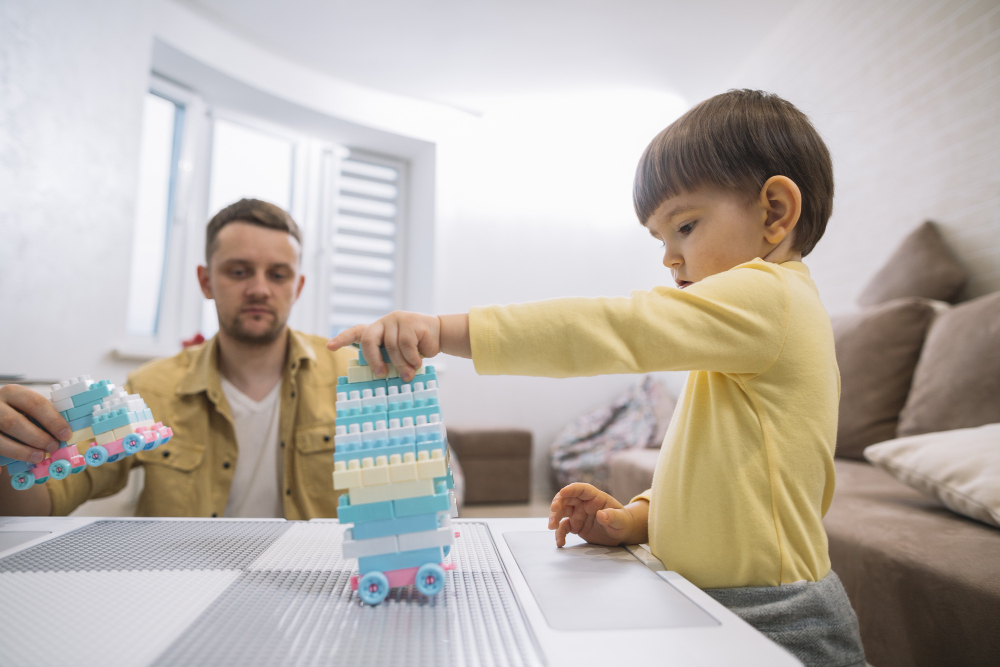
Pretend play is more than just a fun activity. It helps children develop social understanding, communication, problem-solving, and flexible thinking. In a study published in the Journal of Autism and Developmental Disorders, Rutherford and Rogers (2003) found that preschool children with autism engaged in significantly less spontaneous pretend play than typically developing children, making pretend play an important skill clinicians observe during autism assessments.
Not every developmental difference point to autism, and it helps to know what usually doesn’t.
Myth: A child being a late speaker is automatically a sign of autism.
Fact: Autism Speaks notes that being behind on talking by itself, without other social or behavioural differences, often points to a simple speech delay rather than autism.
Myth: A multilingual household causes autism like symptoms.
Fact: A home that runs on English, Arabic, Hindi, and Tagalog all in the same day may influence the age at which a child’s first words show up. However, it cannot be the cause for a child to avoid eye contact, hesitate to play with other kids, or keeps repeating the same movement over and over.
Myth: A shy or introverted toddler likely has autism.
Fact: Plenty of three-year-olds are naturally quieter around groups and warm up once they feel comfortable. The difference shows up in whether they can engage themselves into play once that comfort is there.
Myth: Picky eating always points to sensory issues linked to autism.
Fact: Most toddlers go through a picky eating phase. It’s more relevant when paired with strong reactions to textures elsewhere too, like clothing tags or loud rooms.
Myth: An only child, or one with limited peer exposure, is simply “behind socially,” nothing more.
Fact: Limited exposure to other children can affect social confidence, but it usually doesn’t explain a lack of interest in connecting with adults too, which is a different and more relevant pattern to watch.
If you’re not sure whether what you’re noticing is worth a deeper look, try tracking it for about two weeks across a few different settings: home, nursery, and time with family. Check whether your three-year-old:
Bring specific examples, not just a general feeling, to whoever you talk to next. “He didn’t look up when I called his name three times during dinner last night” is far more useful than “something feels different with my child.”
Let’s list down a few signs that, if parents notice them in their children, may be worth following up on:
You don’t need to wait for the next scheduled paediatrician visit if something feels different. Parents tend to notice these patterns early, often well before a routine appointment catches them.
It’s tempting to wait and see, especially when every other relative insists the child will simply grow out of it. Sometimes that’s true. Often though, waiting just delays support that could have started months earlier.
The Centers for Disease Control and Prevention notes that research shows early intervention services can greatly improve a child’s development and lead to better outcomes. These services may include speech therapy, occupational therapy, behavioural therapy, and family support, depending on a child’s individual needs.
Waiting for a clearer sign that may never show up just pushes that start further away. An early conversation tends to lead to an early answer, and an early answer gives you something concrete to act on instead of more open questions.
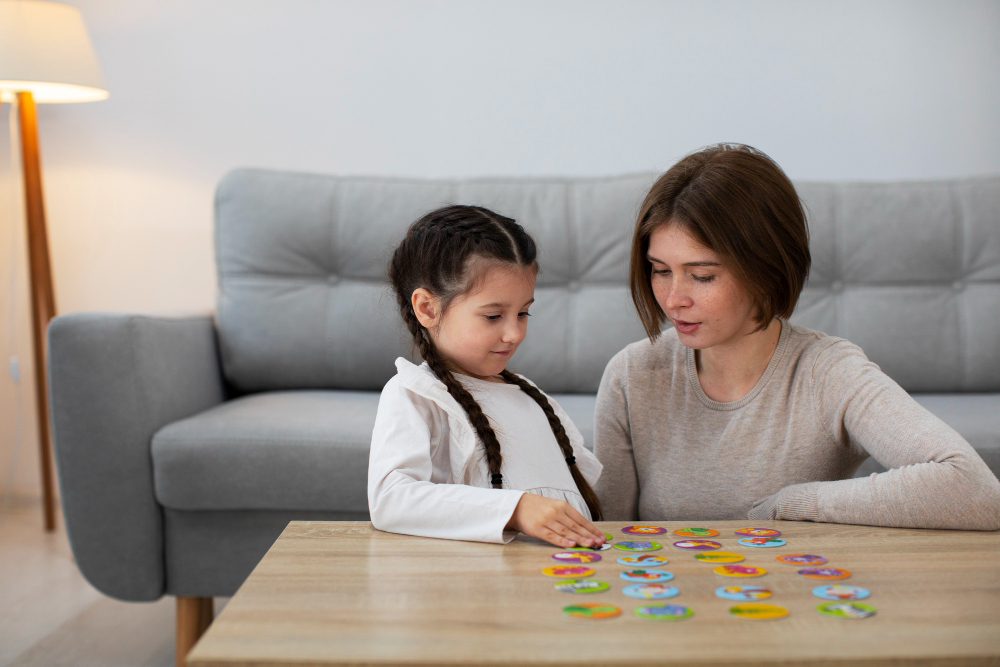
Most assessments start with a fairly relaxed conversation, not a test. The specialist wants to hear how your child communicates, plays, and gets through a normal day, as well as the concerns that you have noticed or raised from the nursery or school regarding your child’s developmental milestones. From there, they spend real time watching your child play and interact, usually through simple, age-appropriate activities, because that tells them far more than a worksheet ever could.
There is no single test that decides anything on its own. A good assessment pulls together your child’s developmental history, what you and other caregivers describe, direct observation, and sometimes a validated tool layered on top of all that, to build an actual picture of where your child is strong and where they could use more support.
By the end, you are not left holding a report with no explanation. You sit down and go through what was found, hear honestly whether anything else needs a closer look, and walk away with next steps you can actually use, not just a list of recommendations on a page.
Families from Karama, Bur Dubai, Deira, Mankhool, and nearby areas often bring nursery observations or PTM feedback to help build a complete picture of their child’s development.
Asha Susan is a Certified International Behaviour Analyst trained in the United States, with over 20 years of experience working with children with autism, ADHD, speech delay, and broader developmental differences. She is based in Dubai and works with families across the UAE.
Her Areas of expertise includes:
Why experience in Dubai matters:
Ms. Asha pairs clinical rigor with a communication style that doesn’t talk over parents. Families need accurate information, but they also need someone who treats them like a partner in the process rather than a bystander.
The goal isn’t to label your child. It’s to better understand how they learn, communicate, and experience the world. If you’ve been noticing the same differences over time, speaking with a qualified professional can help you separate normal developmental variation from signs that may need further evaluation. Whether your concerns are confirmed or simply put to rest, having clear answers allows you to make informed decisions for your child’s future.
This is one of the most common questions parents ask us. If you’ve been noticing the same differences in communication, play, or social interaction for several weeks, it’s worth speaking with a developmental professional rather than waiting to see if things change on their own.
Yes. Teachers spend every day with children of the same age, so they often notice developmental differences early. A nursery’s observations, together with what you see at home, can provide valuable information during an assessment.
Some children are naturally late speakers. What matters is whether your child is also using gestures, making eye contact, showing interest in other people, and trying to communicate in other ways. Looking at the whole picture is more helpful than focusing on speech alone.
Many parents first hear about developmental concerns during a PTM. Rather than assuming the worst, consider arranging a developmental consultation so you can better understand what your child’s teacher has observed.
Parents in Karama tend to ask the same thing before booking: Does this person actually get how things work here, the nursery routines, the school paperwork, a household where two languages might be in play before lunch? Ms. Asha Susan Mani works with that exact context in mind, and a good number of her referrals come from families in Karama, Bur Dubai, and Deira who wanted someone who have been in Dubai rather than starting from scratch with a name they found through a search.
Not required. Many parents book an initial developmental consultation directly to discuss their concerns and understand whether a comprehensive assessment is recommended.
The first appointment is usually a relaxed conversation about your child’s development, followed by play-based observation. There are no written tests for your child, and parents are involved throughout the process.
Not at all. We often see children who are shy, active, or take time to settle. Experienced clinicians know how to observe children naturally through play rather than expecting perfect cooperation.
Many children with autism successfully attend mainstream schools with the right support. The best educational setting depends on your child’s individual strengths, needs, and the resources available at their school.
This happens more often than parents realise. That’s why clinicians consider information from both home and school before forming conclusions about a child’s development.
Many parents hope their child will simply catch up with time. However, if concerns have remained consistent, getting an assessment provides clarity and helps you make informed decisions without unnecessary delays.
Hearing English, Arabic, Hindi, or another language at home may influence when some speech milestones appear, but it doesn’t usually explain why there are differences in social interaction, eye contact, or play.
If possible, yes. Having both parents present often provides a fuller picture of your child’s development, but one parent can also attend if work or family commitments make that easier.
A lot of parents we see are juggling a full-time job and school runs already, so squeezing in one more appointment can feel impossible. That’s why evening and weekend slots exist too, so getting your child for an assessment doesn’t mean rearranging your entire week.
Bring any nursery reports, school feedback, previous therapy records, or notes you’ve made about your child’s development. These details often help clinicians understand the bigger picture.
Some children manage everything in one longer session, while others need it broken up across two or three visits so they don’t get overwhelmed, especially if more than one specialist is involved. Your first consultation will give you a much clearer picture of which path fits your child, including whether follow-up sessions are required.
Parents often notice developmental differences before teachers do. If you’ve been consistently concerned, it’s reasonable to seek professional advice even without school feedback.
Yes. Anyone who spends significant time with your child can often provide helpful information about their development and everyday behaviour.