Autism Checklist for Parents in Dubai
20/08/2026
If you’re reading this, you’ve probably noticed something that made you pause. Noticing small differences in your child’s developmental skills does not mean you’re overreacting. It means you’re paying attention.
Autism spectrum disorder, usually shortened to ASD, is a developmental difference that shapes how a child communicates, connects socially, and responds to the world. In a 1-year-old, the earliest signs rarely look dramatic. They show up in small moments, such as how a baby reacts to hearing their own name. Whether the baby share smiles with you. How often a child reaches out or points at something to share it with you.
This guide focuses specifically on the period around a child’s first birthday, since that is the stage most relevant to many families asking these questions. Parents in Dubai tend have these questions a little earlier than families elsewhere, sometimes because of routine developmental checkups with the paediatrician, or because of feedback from a caregiver or relative.
One honest caveat up front: this is an educational article, not a diagnostic tool. Only a qualified professional who has actually spent time observing your child can assess their speech, language and developmental milestones.
One of these on its own usually isn’t the full story. A cluster of them appearing together, particularly with limited eye contact, limited pointing skills, and an inconsistent response to their own name, is the pattern that indicate a further developmental screening would help.
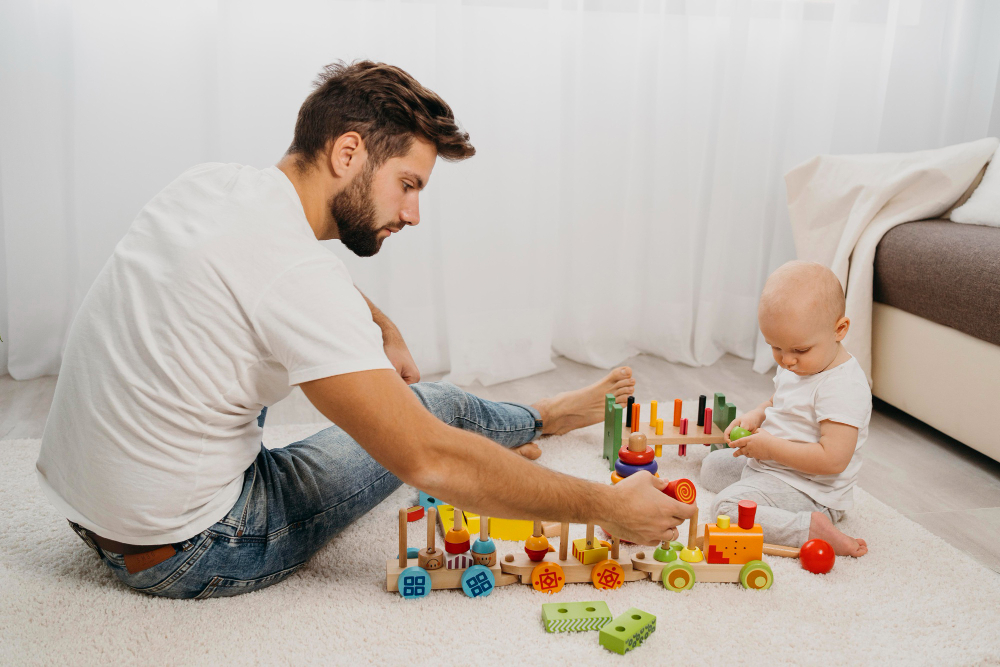
At around their first birthday, babies tend to be more interactive and social. They enjoy engaging with parents and familiar caregivers, start responding to familiar voices and their name, use gestures to communicate and gain attention, imitate gestures and engage in social games. Sometimes parents first notice these developmental concerns when a relative or a family friend makes an observation or when they visit a paediatrician for a routine check-up.
There’s also a concern that highlights the use of multiple languages at homes. Dubai households are often multilingual by default; a baby might be hearing English from relatives, Arabic from a grandparent, Tagalog or Hindi from a caregiver, sometimes all three before lunchtime. Reasonably, parents wonder whether their child is simply juggling languages rather than showing a real concern. Growing up with multiple languages doesn’t cause autism, and it doesn’t really explain reduced eye contact or a muted response to their name. The development of speech skills may shift a bit in multilingual homes. Social connection is a different category, and it’s worth tracking separately rather than writing off as “just the languages.”
There’s also a practical reason families here often want someone within the UAE to discuss their concerns: nursery paperwork, developmental documentation, and the general rhythm of the UAE early years system are easier to navigate with someone who’s actually worked inside it, rather than starting from zero with a consultant overseas.
Autism spectrum disorder relates to brain development, particularly around social communication and behaviour patterns. According to the Centers for Disease Control and Prevention (CDC), there is not a single recognized cause of autism spectrum disorder. Research indicates that both genetic and environmental factors can also play a role. Additionally, studies have not discovered a connection between vaccines and autism.
In some babies, a difference is noticeable earlier than 12 months. But for most of the families who reach out right around their child’s first birthday, it’s the 12-month mark itself where things come into sharper focus, sometimes through a skill that was once acquired and currently is not consistent in the child. That’s sometimes called regression, and it’s worth taking seriously whenever it happens, including right around this stage. As autism is a spectrum disorder, the early signs or red flags shown by two different babies may not always be the same, which is precisely why a checklist by itself can never provide the whole picture.
What actually matters for parents of a 1-year-old isn’t memorizing a list of red flags. It’s noticing patterns over time, across different settings. A single missed milestone rarely means much by itself. It’s the combination of several developmental differences, observed consistently at home, at nursery, and with extended family, that’s worth bringing to a professional.
By the time a baby turns 1, some developmental differences may become easier to notice. Response to their own name, pointing or reaching to request something, waving bye, and simple games like peekaboo often begin to take shape around this age. A baby who is showing several of these differences by their first birthday may benefit from further discussion with a paediatrician or developmental professional.
Some of these patterns may have been visible over the weeks, and that’s worth mentioning to a professional rather than waiting. For many families, the period around a child’s first birthday is when these developmental differences become noticeable, which is why it is often the focus of these conversations.
This is the part where parents are often confused.
A baby who is slower to develop sounds or early words but can still point, make eye contact, smile back, enjoy social games, and enjoy connecting with others, may indicate a delay in speech and language skills. The communication style is social; however, the first true words just haven’t caught up yet.
Autism spectrum disorder tends to involve differences that go beyond speech developments. Guidance from the National Health Service (NHS) notes that differences in social communication, eye contact, use of gestures, and interaction can occur alongside speech or language delays.
And then there’s a typical variation that we see: they are the quieter babies, a slightly later babbler, or a baby who is slightly shy around strangers. These babies still respond to their name consistently, still seek you out for comfort, and still show a clear back and forth interaction with you.
As a general rule, delays in sounds or early language without differences in social interaction may point toward a speech or language delay, though every child develops differently. A delay in speech combined with reduced eye contact, a muted response to name, and less interest in shared play is what pushes things toward a detailed evaluation.
You don’t need to wait for the next scheduled checkup if something feels consistently different. A few situations worth acting on sooner rather than later:
Parents often notice developmental differences before they are discussed during a routine clinic visit, especially when something has been causing concern for over a period of time. If these concerns persist, then it’s always beneficial to go for a detailed evaluation.
Noticing something different about your 1-year-old doesn’t mean you’ve done anything wrong, and it doesn’t decide their future. A lot of parents say not knowing is the hardest part of all this, harder than whatever the answer turns out to be. Getting clarity, whatever it ends up looking like, tends to bring real relief.
There’s no perfect moment to wait for, and no benefit to waiting for a clearer sign that may or may not show up later. An early conversation leads to an early answer, and an early answer gives you something you can actually act on.
If you remain concerned about your baby’s development or would like to speak with someone about the signs you have noticed, contact Asha4Autism for guidance and support. For many parents, having a conversation and getting clear answers can make the next steps feel much easier to understand.
For most parents, it isn’t one big sign. It’s several small things that start adding up. Maybe their baby rarely looks up when their name is called, doesn’t point to share things, or seems less interested in games that usually get a smile or laugh.
Around a child’s first birthday, parents often become concerned about things like limited eye contact, fewer gestures, not responding to their name, or losing a skill that had already started to appear.
There can be an occasional lack of response babies show to their name when called. What tends to stand out is when it happens consistently, especially by 12 months. If you’re calling your child repeatedly and rarely getting a response, it’s worth bringing up.
They can. Some parents describe having a feeling that something felt different long before their child turned one, even if they couldn’t quite explain why at the time.
Not on its own. Plenty of babies make less eye contact than others. What matters more is the bigger picture. Eye contact, gestures, social smile, and response to people are the major areas to be considered while thinking of autism.
Quite a few one-year-olds still aren’t using clear words. The question professionals usually ask is whether the baby is trying to communicate in other ways, through sounds, gestures, expressions, or looking toward other people.
A speech delay can happen on its own. Many late talkers still point at things, bring toys to their parents, and clearly want to share experiences. Autism usually affects social communication and play skills more broadly.
Sometimes, especially at this age. The difference often comes down to connection. A child with a speech delay may still be highly social even if words are taking longer to arrive.
This question comes up often in Dubai. Different languages can influence when words appear, but they don’t explain reduced social interaction, fewer gestures, or a limited response to a child’s name.
Many babies around this age enjoy peekaboo, respond when their name is called, smile back, wave, point, or look toward their parents to share something interesting. Development varies, but these moments help parents understand how their child is connecting.
Parents usually reach out when several concerns start happening together. A single sign might be a difference in personality, however, a variation in developmental patterns that keeps showing up over weeks or months deserves a closer look.
That situation is far more common than many parents realize. A single behaviour rarely provides a clear answer, which is why professionals look at overall development rather than one isolated concern.
Whenever a baby stops doing something they were doing before, whether that’s waving, babbling, or using a word, it’s worth mentioning. It doesn’t directly point to autism, but it is something professionals do consider during an evaluation.
Parents often notice that some days look completely different from others. Tiredness, illness, changes in routine, and growth spurts can all affect behaviour, which is why patterns over time matter more than a single day.
Many babies repeat actions or become interested in doing things the same way over and over. On its own, that usually doesn’t tell you very much. Context matters.
Sometimes they do. Nursery staff spend their days watching groups of children the same age, which can make certain social differences easier to notice in a classroom setting.
Some developmental differences can be identified around a child’s first birthday, although every child develops at their own pace. The goal of an assessment is usually to understand what a child needs rather than to rush toward a label.
Parents often worry they’re overreacting, but early conversations are very common. Speaking with a professional doesn’t commit you to anything. It simply gives you more information.
Research has looked at this question many times over many years. The evidence continues to show that vaccines do not cause autism.
If you notice differences in your child’s development or milestones, write down the moments that concern you. Those observations can make it much easier to have a productive conversation with your paediatrician or a developmental professional.