HomeBlogWhy Is My Child Not Responding to Their Name? Causes, Autism Signs, and When to Be Concerned

Why Is My Child Not Responding to Their Name? Causes, Autism Signs, and When to Be Concerned

Blog Insights and information regarding child autism
admin
18/07/2026

Children may not respond to their name for several reasons. Sometimes the cause is as simple as being too focused on play. Other times, it could be a hearing concern, a speech delay, or something like autism spectrum disorder. If it keeps happening, and especially if other things seem a little off developmentally, getting a professional to take a look is the smartest thing a parent can do.

Key Takeaway: Not responding to a name does not automatically mean autism. But when it keeps happening and additional developmental concerns are present, getting a proper evaluation early makes a real difference.


What It Means When a Child Does Not Respond to Their Name

Most parents have been there. A child is playing, a parent calls the name from across the room, and nothing happens. No look up, no pause, no reaction. When this happens once or twice, it is easy to brush off. When it keeps happening, it is harder to ignore.

Not responding to a name is one of the initial actions that developmental specialists and pediatricians pay close attention to in young children. The reason this behavior gets so much attention is not because it always signals a developmental disorder. It is because the same behavior can have very different causes, and figuring out which cause is behind it matters a great deal for what parents should do next.

Understanding the difference between a child who is deeply concentrated on a toy and a child who genuinely does not register their name being called is the starting point for every parent navigating this concern.


When Babies and Toddlers Typically Begin Responding to Their Name

Name response develops gradually during infancy. Many babies begin showing awareness of familiar voices and their own name by around 6 months of age. By around 9 months, many babies consistently respond to their own name, and this is included as a developmental milestone by the CDC. The Centers for Disease Control and Prevention includes name response in the 9-month milestone checklist as a key indicator of early social and communicative development.

By 12 months, most children will look up, make eye contact, or move toward the person calling them. A child who is not doing this consistently by 12 months is showing a pattern worth discussing with a pediatrician at the next scheduled visit, or sooner if other signs are present alongside it.


Common Causes of Not Responding to Name That Are Not Autism

Parents searching this topic often find themselves reading about autism almost immediately, before any other causes get properly explained. That is not fair to parents, and it is not accurate either.

Deep Concentration During Play

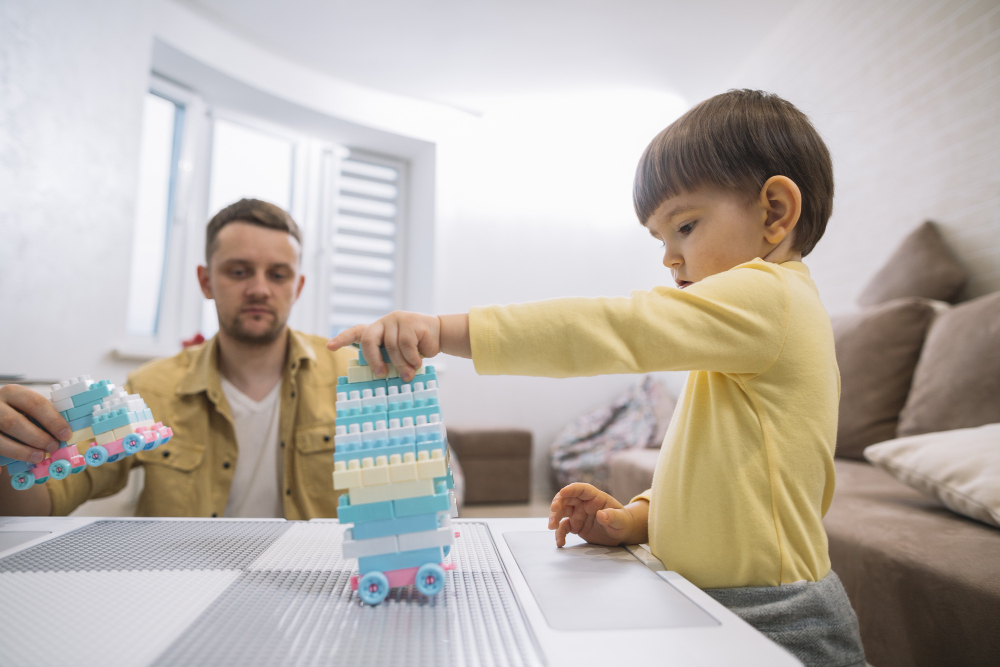
Young children get absorbed in what they are doing in a way that adults rarely experience. When a child is building something, watching a favorite show, or engaged in pretend play, the child may genuinely not process a parent’s voice from across the room. This is common in children aged 2 to 4.

The difference between this and a developmental concern is what happens when the parent approaches the child and sits at their level. A child who is simply concentrated will typically look up, make eye contact, and engage normally once the parent is within close range.

Temporary Hearing Concerns

Fluid behind the eardrum, ear infections, and mild hearing loss are all more common in young children than many parents realize. A child with reduced hearing may respond differently to environmental sounds than to speech, particularly when someone is calling from another room or speaking softly.

A hearing assessment helps determine whether hearing is contributing to the child’s reduced response. This pattern can look a lot like selective listening or inattention, but the cause is physical. A hearing assessment is often the most straightforward first step when name response concerns come up, and it rules out a very fixable problem quickly.

Speech and Language Delays

Some children develop language more slowly than their peers. When a child has a language delay that also affects comprehension, the child may not yet process their own name as a meaningful word that requires a response. This is different from autism.

A speech and language evaluation can identify whether the child is taking in spoken language at the expected level for their age, and can guide parents toward the right type of support.

Autism Spectrum Disorder

Autism is one cause of reduced name response, but it is one among several, and it does not appear in isolation. When autism is the reason a child is not responding to their name, other early signs are almost always present as well. Clinicians look at the full picture before reaching any conclusion.

When Not Responding to a Name May Be an Early Sign of Autism

Autism spectrum disorder affects the way a child processes and responds to social communication. Reduced response to one’s own name, particularly during the second year of life, is one of the early behavioral signs that specialists consider alongside other aspects of a child’s development.

Research published in the journal Pediatrics by Nadig et al. found that reduced response to one’s name during infancy was associated with an increased likelihood of a later autism diagnosis. This is one reason developmental pediatricians pay close attention to name response during routine checkups.

Name response becomes a stronger concern when it appears alongside:

  • Limited or no eye contact during interaction with familiar caregivers
  • Absence of pointing, showing, or following a caregiver’s gaze (joint attention)
  • Limited babbling or few words by 12 months
  • Loss of words or social skills that the child previously had
  • Reduced interest in other people’s faces or expressions

When several of these signs are present together, an autism screening is the appropriate and important next step. Autism assessment services are available through Asha4Autism in Dubai and Sharjah.

Other Developmental Signs to Watch Alongside Reduced Name Response

One behavior on its own tells an incomplete story. Developmental specialists always assess name response as part of a broader behavioral picture. Parents watching their child at home can note whether the following are also present:

  • The child responds to television sounds, music, or environmental noise but does not respond to people calling their name
  • The child rarely or never looks toward the door when someone enters the room
  • The child does not copy simple gestures or facial expressions
  • The child shows limited interest in playing near or with other children
  • The child has a very narrow set of interests and becomes distressed when routines are disrupted

Writing these observations down before an appointment is genuinely useful. Clinicians rely on parent observations to build an accurate picture of the child’s behavior across different settings, not just within a clinical room during a single session.

A Practical Guide to Possible Causes, Signs, and Next Steps

Possible Cause What Parents Typically Notice Recommended Action
Deep concentration Child responds when approached directly Continue observing
Hearing difficulty Child responds inconsistently to speech or other sounds Hearing assessment
Speech or language delay Limited vocabulary or comprehension Speech and language evaluation
Autism spectrum disorder Limited eye contact, reduced joint attention, consistent non-response Autism screening
General developmental delay Multiple milestone delays across areas Developmental assessment

How Developmental Specialists Assess Children Who Do Not Respond to Their Name

A good assessment does not rely on one test or one session. At Asha4Autism, the assessment process brings together multiple types of information to build an accurate picture of what is driving the behavior.

Developmental Screening

Tools like the Modified Checklist for Autism in Toddlers (M-CHAT-R) help clinicians identify children who may benefit from a full diagnostic evaluation. The American Academy of Pediatrics recommends autism-specific screening at 18 and 24 months as a routine part of pediatric care.

Hearing Evaluation

Hearing function is either assessed directly during the evaluation process or confirmed through a separate audiology appointment before the behavioral evaluation proceeds. This step ensures that the team is assessing a child’s social communication accurately and not missing a sensory explanation.

Behavioral Observation

Clinicians observe how the child interacts with caregivers, how the child plays, and how the child responds to social bids from unfamiliar adults. This observation gives clinicians direct evidence of joint attention, social communication, and response to name in a structured setting outside the home.

Parent Interview

Parents know their child better than any clinician does after a single session. The parent interview gathers information about the child’s developmental history, early milestones, and the specific situations where name non-response is most consistent. This context helps clinicians distinguish between a child who never responds to their name and a child who responds sometimes but not reliably.

What Parents Can Observe and Do at Home Before an Appointment

Waiting for a professional appointment can feel frustrating, especially when a parent is worried. There are practical steps that give parents useful information to bring to the assessment without replacing the need for professional evaluation.

Parents can call the child’s name during quiet moments when there is no background noise from screens or other distractions. Getting down to the child’s level before calling the name gives a clearer picture of whether the child is registering the sound or not. Noticing whether the child responds to other sounds in the environment, such as music, clapping, or a door opening, helps distinguish between a hearing concern and a social communication concern.

Keeping a brief written record over one to two weeks is worth the effort. Noting when the child responds, when the child does not, and what the child was doing at the time gives clinicians meaningful context. It also helps parents feel more confident going into an appointment because the information is documented rather than recalled under pressure.

One practical tip: calling a child’s name repeatedly when the child does not respond can gradually reduce the child’s attunement to the name as a meaningful cue. Calling once, moving closer, and creating a moment of interaction is a more effective approach during this oservation period.


How Early Identification Changes Outcomes

This matters to say clearly. Early identification does not just lead to earlier diagnosis. It leads to earlier access to support, and research suggests that many children who receive appropriate intervention early show improved outcomes in communication, learning, social interaction, and daily living skills.

Research consistently shows that early identification and timely access to appropriate intervention can improve communication, learning, social interaction, and daily living skills for many children with autism. Because of this, persistent developmental concerns should be evaluated without unnecessary delay rather than waiting to see whether a child grows out of them.

Early intervention through ABA therapy and speech therapy gives children practical skills across communication, sensory processing, and daily life. The earlier these supports begin, the more the child benefits.

When to Seek Professional Help in Dubai or Sharjah

Parents in Dubai and Sharjah do not need a diagnosis in hand before reaching out. A concern is enough. Asha4Autism offers developmental assessments and early intervention programs for children across the UAE, and the team works with families from the point of initial concern through to individualized therapy planning.

If a child is showing consistent name non-response alongside any of the other behaviors described in this article, scheduling a parent consultation is a practical and low-pressure starting point. Getting a professional perspective early is always the right call, even if the outcome of the assessment is reassurance that development is on track.

Contact Asha4Autism

Frequently Asked Questions

1. How do I know if my child is not responding to their name because of autism or just ignoring me?

This is something many parents ask us, and honestly, it can be really hard to tell on your own. If your child responds sometimes but not always, it might just be distraction. But if the lack of response is consistent and you are also noticing things like limited eye contact or delayed speech, it is worth getting a proper assessment done. Our team at Asha4Autism in Karama can help you figure out what is actually going on.

2. Is it normal if my toddler does not look up when I call their name?

It depends. We often see this in children who are just deeply focused on what they are doing. But if your toddler is past 12 months and this is happening regularly, even when there are no distractions around, that is the kind of thing a specialist should take a look at. Early is always better when it comes to getting answers.

3. Where can I find a child development specialist near Karama, Dubai for this kind of concern?

Asha4Autism is based in Karama and works with families from across Dubai, including Bur Dubai, Mankhool, and Deira. Many parents who come to us are working parents who need a center that is easy to reach without a long commute. You can reach out directly through our website to book a consultation.

4. Do I need to worry if my child’s nursery teacher in Bur Dubai mentioned that my child never responds when called?

Teacher observations from nursery are actually really valuable, and we would not brush that off. Teachers see children in group settings, which often makes these patterns more visible. If the teacher is noticing it and you are seeing it at home too, that is a pattern worth taking seriously. A quick consultation with a developmental specialist can give you a much clearer picture.

5. How do I know if my child’s name response problem is a hearing issue or something else?

A hearing test is usually the first step, and for good reason. Some children with mild hearing loss can still respond to loud sounds like the television but miss softer sounds like a parent’s voice. If the hearing test comes back normal and the pattern continues, that is when a developmental assessment makes sense. We can guide you through both steps if you are based near Dubai.

6. Is it too early to get my 10-month-old assessed if the baby is not responding to their name?

It is never too early to ask the question. You may not get a full diagnosis at 10 months, but a specialist can observe your baby, track what is there and what is not, and tell you what to watch for over the next few months. Asha Susan Mani and the team at Asha4Autism have worked with very young children and their families through exactly this kind of early concern.

7. My child responds to cartoon sounds but not to me calling their name. Should I be worried?

When a child responds to environmental sounds but not to a human voice or their own name, it may suggest differences in social attention or communication. However, hearing should still be evaluated first, as some hearing difficulties can affect responses to speech differently from other sounds. If this pattern continues, a developmental assessment can help identify the underlying cause.

8. Where can I get an autism screening done near Deira or Mankhool without a long wait?

If you are based in Deira, Mankhool, or anywhere in the Bur Dubai area, Asha4Autism in Karama is honestly not far at all. A lot of the parents we see are juggling work and kids and simply cannot spend half their week travelling across the city for appointments. Drop us a message and we will figure out a time that actually works for you.

9. Do I need a referral from a pediatrician before coming to Asha4Autism in Karama?

No, you do not. Many families come to us directly after noticing something at home or hearing a concern from a teacher at a CBSE school or nursery nearby. A referral is not required. You can contact the team and book a parent consultation as your first step.

10. How long does it take to see improvement after starting therapy for a child who is not responding to their name?

Every child moves at their own pace, and anyone who gives you a fixed timeline upfront is not being fully honest with you. Some families start noticing small shifts within the first few weeks. For others it takes longer, and that is completely okay. What matters is that progress is real and building in the right direction.

11. My child is in a CBSE school in Deira and the teacher says my child seems unaware in class. Could this be connected to not responding to their name?

It could be connected. Classroom inattention and reduced response to a name can have several possible causes, including hearing concerns, language delays, attention differences, or developmental conditions. A comprehensive assessment can help identify the underlying reason and guide the appropriate support.

12. Is it possible my child is just shy and that is why the child does not respond to the name?

Shyness is real, but it tends to look a little different. A shy child usually responds to their name but avoids interaction afterward. A child who genuinely does not register being called is showing something different. If your gut is telling you this is more than shyness, trust that instinct and get it checked out.

13. What actually happens during an autism assessment at Asha4Autism for a young child?

The process is calm and child-friendly. The team observes how your child plays, interacts, and responds in different situations. Parents are also interviewed because your daily observations matter enormously. There is no pressure and no rushing. The goal is to understand your child fully before making any recommendations.

14. Can ABA therapy help my child start responding to their name if autism is confirmed?

Yes, and this is actually one of the first things the team works on. When a child starts ABA therapy at Asha4Autism, responding to their name and building basic social attention are usually right at the top of the list. Sessions are structured but also warm and encouraging, so children are not overwhelmed. Over time, most children do begin to look up, make eye contact, and connect with the people around them in ways they were not doing before.

15. As a working parent in Dubai, how do I manage therapy sessions without it affecting my work schedule?

This is one of the most common concerns parents bring up when they first call us. Between the commute, work hours, and everything else life in Dubai demands, finding time feels impossible. The best thing to do is just call or WhatsApp the Asha4Autism team in Karama and tell them your situation. Parents coming from Bur Dubai, Mankhool, and Deira do this all the time, and the team will work with you to find something that actually fits your week.

16. My child responded to their name a few months ago but stopped. Is that more concerning than never responding at all?

Yes, a loss of a skill that a child previously had is something developmental specialists take seriously. This is called regression, and it is one of the signs that warrants a prompt assessment rather than a wait-and-see approach. If your child was responding and has now stopped, please reach out to a specialist as soon as possible.

17. Can speech therapy alone help a child who is not responding to their name, or is more support needed?

It depends on the underlying cause. If reduced name response is related primarily to a language or comprehension delay, speech therapy alone may be appropriate. If autism is identified, many children benefit from a combination of ABA therapy, speech therapy, and, when appropriate, occupational therapy. The most suitable combination depends on each child’s individual strengths, needs, and assessment findings.

18. How is Asha4Autism different from other therapy centers near Dubai?

Every child who walks into Asha4Autism is different, and the team treats them that way. Rather than following a one-size-fits-all approach, Asha Susan Mani and the team take the time to understand your child specifically before deciding what support makes sense. Parents from across Dubai, including families coming from Deira, Mankhool, and Bur Dubai, tell us that just being heard from the very first conversation made a difference. The Karama location also means the journey to get here does not add more pressure to an already busy week.

19. What can I do at home this week while I wait for an appointment?

Call your child’s name once in a quiet room with no television or background noise. Get down to the child’s level. Notice whether the child responds to other sounds around the house. Write down what you observe over the next few days, including when the child responds and when the child does not, and what the child was doing at the time. These notes will be genuinely useful when you meet with the specialist.

20. How do I get started with Asha4Autism in Karama if I am concerned about my child?

You can reach out directly through the Asha4Autism website to book a parent consultation. You do not need a diagnosis, a referral, or certainty that something is wrong. If you have a concern, that is enough to get started. The team is there to listen, assess, and guide you toward the right support for your child, whatever that turns out to be.


Children may not respond to their name for several reasons. Sometimes the cause is as simple as being too focused on play. Other times, it could be a hearing concern, a speech delay, or something like autism spectrum disorder. If it keeps happening, and especially if other things seem a little off developmentally, getting a professional to take a look is the smartest thing a parent can do.

Key Takeaway: Not responding to a name does not automatically mean autism. But when it keeps happening and additional developmental concerns are present, getting a proper evaluation early makes a real difference.


What It Means When a Child Does Not Respond to Their Name

Most parents have been there. A child is playing, a parent calls the name from across the room, and nothing happens. No look up, no pause, no reaction. When this happens once or twice, it is easy to brush off. When it keeps happening, it is harder to ignore.

Not responding to a name is one of the initial actions that developmental specialists and pediatricians pay close attention to in young children. The reason this behavior gets so much attention is not because it always signals a developmental disorder. It is because the same behavior can have very different causes, and figuring out which cause is behind it matters a great deal for what parents should do next.

Understanding the difference between a child who is deeply concentrated on a toy and a child who genuinely does not register their name being called is the starting point for every parent navigating this concern.


When Babies and Toddlers Typically Begin Responding to Their Name

Name response develops gradually during infancy. Many babies begin showing awareness of familiar voices and their own name by around 6 months of age. By around 9 months, many babies consistently respond to their own name, and this is included as a developmental milestone by the CDC. The Centers for Disease Control and Prevention includes name response in the 9-month milestone checklist as a key indicator of early social and communicative development.

By 12 months, most children will look up, make eye contact, or move toward the person calling them. A child who is not doing this consistently by 12 months is showing a pattern worth discussing with a pediatrician at the next scheduled visit, or sooner if other signs are present alongside it.


Common Causes of Not Responding to Name That Are Not Autism

Parents searching this topic often find themselves reading about autism almost immediately, before any other causes get properly explained. That is not fair to parents, and it is not accurate either.

Deep Concentration During Play

Young children get absorbed in what they are doing in a way that adults rarely experience. When a child is building something, watching a favorite show, or engaged in pretend play, the child may genuinely not process a parent’s voice from across the room. This is common in children aged 2 to 4.

The difference between this and a developmental concern is what happens when the parent approaches the child and sits at their level. A child who is simply concentrated will typically look up, make eye contact, and engage normally once the parent is within close range.

Temporary Hearing Concerns

Fluid behind the eardrum, ear infections, and mild hearing loss are all more common in young children than many parents realize. A child with reduced hearing may respond differently to environmental sounds than to speech, particularly when someone is calling from another room or speaking softly.

A hearing assessment helps determine whether hearing is contributing to the child’s reduced response. This pattern can look a lot like selective listening or inattention, but the cause is physical. A hearing assessment is often the most straightforward first step when name response concerns come up, and it rules out a very fixable problem quickly.

Speech and Language Delays

Some children develop language more slowly than their peers. When a child has a language delay that also affects comprehension, the child may not yet process their own name as a meaningful word that requires a response. This is different from autism.

A speech and language evaluation can identify whether the child is taking in spoken language at the expected level for their age, and can guide parents toward the right type of support.

Autism Spectrum Disorder

Autism is one cause of reduced name response, but it is one among several, and it does not appear in isolation. When autism is the reason a child is not responding to their name, other early signs are almost always present as well. Clinicians look at the full picture before reaching any conclusion.

When Not Responding to a Name May Be an Early Sign of Autism

Autism spectrum disorder affects the way a child processes and responds to social communication. Reduced response to one’s own name, particularly during the second year of life, is one of the early behavioral signs that specialists consider alongside other aspects of a child’s development.

Research published in the journal Pediatrics by Nadig et al. found that reduced response to one’s name during infancy was associated with an increased likelihood of a later autism diagnosis. This is one reason developmental pediatricians pay close attention to name response during routine checkups.

Name response becomes a stronger concern when it appears alongside:

  • Limited or no eye contact during interaction with familiar caregivers
  • Absence of pointing, showing, or following a caregiver’s gaze (joint attention)
  • Limited babbling or few words by 12 months
  • Loss of words or social skills that the child previously had
  • Reduced interest in other people’s faces or expressions

When several of these signs are present together, an autism screening is the appropriate and important next step. Autism assessment services are available through Asha4Autism in Dubai and Sharjah.

Other Developmental Signs to Watch Alongside Reduced Name Response

One behavior on its own tells an incomplete story. Developmental specialists always assess name response as part of a broader behavioral picture. Parents watching their child at home can note whether the following are also present:

  • The child responds to television sounds, music, or environmental noise but does not respond to people calling their name
  • The child rarely or never looks toward the door when someone enters the room
  • The child does not copy simple gestures or facial expressions
  • The child shows limited interest in playing near or with other children
  • The child has a very narrow set of interests and becomes distressed when routines are disrupted

Writing these observations down before an appointment is genuinely useful. Clinicians rely on parent observations to build an accurate picture of the child’s behavior across different settings, not just within a clinical room during a single session.

A Practical Guide to Possible Causes, Signs, and Next Steps

Possible Cause What Parents Typically Notice Recommended Action
Deep concentration Child responds when approached directly Continue observing
Hearing difficulty Child responds inconsistently to speech or other sounds Hearing assessment
Speech or language delay Limited vocabulary or comprehension Speech and language evaluation
Autism spectrum disorder Limited eye contact, reduced joint attention, consistent non-response Autism screening
General developmental delay Multiple milestone delays across areas Developmental assessment

How Developmental Specialists Assess Children Who Do Not Respond to Their Name

A good assessment does not rely on one test or one session. At Asha4Autism, the assessment process brings together multiple types of information to build an accurate picture of what is driving the behavior.

Developmental Screening

Tools like the Modified Checklist for Autism in Toddlers (M-CHAT-R) help clinicians identify children who may benefit from a full diagnostic evaluation. The American Academy of Pediatrics recommends autism-specific screening at 18 and 24 months as a routine part of pediatric care.

Hearing Evaluation

Hearing function is either assessed directly during the evaluation process or confirmed through a separate audiology appointment before the behavioral evaluation proceeds. This step ensures that the team is assessing a child’s social communication accurately and not missing a sensory explanation.

Behavioral Observation

Clinicians observe how the child interacts with caregivers, how the child plays, and how the child responds to social bids from unfamiliar adults. This observation gives clinicians direct evidence of joint attention, social communication, and response to name in a structured setting outside the home.

Parent Interview

Parents know their child better than any clinician does after a single session. The parent interview gathers information about the child’s developmental history, early milestones, and the specific situations where name non-response is most consistent. This context helps clinicians distinguish between a child who never responds to their name and a child who responds sometimes but not reliably.

What Parents Can Observe and Do at Home Before an Appointment

Waiting for a professional appointment can feel frustrating, especially when a parent is worried. There are practical steps that give parents useful information to bring to the assessment without replacing the need for professional evaluation.

Parents can call the child’s name during quiet moments when there is no background noise from screens or other distractions. Getting down to the child’s level before calling the name gives a clearer picture of whether the child is registering the sound or not. Noticing whether the child responds to other sounds in the environment, such as music, clapping, or a door opening, helps distinguish between a hearing concern and a social communication concern.

Keeping a brief written record over one to two weeks is worth the effort. Noting when the child responds, when the child does not, and what the child was doing at the time gives clinicians meaningful context. It also helps parents feel more confident going into an appointment because the information is documented rather than recalled under pressure.

One practical tip: calling a child’s name repeatedly when the child does not respond can gradually reduce the child’s attunement to the name as a meaningful cue. Calling once, moving closer, and creating a moment of interaction is a more effective approach during this oservation period.


How Early Identification Changes Outcomes

This matters to say clearly. Early identification does not just lead to earlier diagnosis. It leads to earlier access to support, and research suggests that many children who receive appropriate intervention early show improved outcomes in communication, learning, social interaction, and daily living skills.

Research consistently shows that early identification and timely access to appropriate intervention can improve communication, learning, social interaction, and daily living skills for many children with autism. Because of this, persistent developmental concerns should be evaluated without unnecessary delay rather than waiting to see whether a child grows out of them.

Early intervention through ABA therapy and speech therapy gives children practical skills across communication, sensory processing, and daily life. The earlier these supports begin, the more the child benefits.

When to Seek Professional Help in Dubai or Sharjah

Parents in Dubai and Sharjah do not need a diagnosis in hand before reaching out. A concern is enough. Asha4Autism offers developmental assessments and early intervention programs for children across the UAE, and the team works with families from the point of initial concern through to individualized therapy planning.

If a child is showing consistent name non-response alongside any of the other behaviors described in this article, scheduling a parent consultation is a practical and low-pressure starting point. Getting a professional perspective early is always the right call, even if the outcome of the assessment is reassurance that development is on track.

Contact Asha4Autism

Frequently Asked Questions

1. How do I know if my child is not responding to their name because of autism or just ignoring me?

This is something many parents ask us, and honestly, it can be really hard to tell on your own. If your child responds sometimes but not always, it might just be distraction. But if the lack of response is consistent and you are also noticing things like limited eye contact or delayed speech, it is worth getting a proper assessment done. Our team at Asha4Autism in Karama can help you figure out what is actually going on.

2. Is it normal if my toddler does not look up when I call their name?

It depends. We often see this in children who are just deeply focused on what they are doing. But if your toddler is past 12 months and this is happening regularly, even when there are no distractions around, that is the kind of thing a specialist should take a look at. Early is always better when it comes to getting answers.

3. Where can I find a child development specialist near Karama, Dubai for this kind of concern?

Asha4Autism is based in Karama and works with families from across Dubai, including Bur Dubai, Mankhool, and Deira. Many parents who come to us are working parents who need a center that is easy to reach without a long commute. You can reach out directly through our website to book a consultation.

4. Do I need to worry if my child’s nursery teacher in Bur Dubai mentioned that my child never responds when called?

Teacher observations from nursery are actually really valuable, and we would not brush that off. Teachers see children in group settings, which often makes these patterns more visible. If the teacher is noticing it and you are seeing it at home too, that is a pattern worth taking seriously. A quick consultation with a developmental specialist can give you a much clearer picture.

5. How do I know if my child’s name response problem is a hearing issue or something else?

A hearing test is usually the first step, and for good reason. Some children with mild hearing loss can still respond to loud sounds like the television but miss softer sounds like a parent’s voice. If the hearing test comes back normal and the pattern continues, that is when a developmental assessment makes sense. We can guide you through both steps if you are based near Dubai.

6. Is it too early to get my 10-month-old assessed if the baby is not responding to their name?

It is never too early to ask the question. You may not get a full diagnosis at 10 months, but a specialist can observe your baby, track what is there and what is not, and tell you what to watch for over the next few months. Asha Susan Mani and the team at Asha4Autism have worked with very young children and their families through exactly this kind of early concern.

7. My child responds to cartoon sounds but not to me calling their name. Should I be worried?

When a child responds to environmental sounds but not to a human voice or their own name, it may suggest differences in social attention or communication. However, hearing should still be evaluated first, as some hearing difficulties can affect responses to speech differently from other sounds. If this pattern continues, a developmental assessment can help identify the underlying cause.

8. Where can I get an autism screening done near Deira or Mankhool without a long wait?

If you are based in Deira, Mankhool, or anywhere in the Bur Dubai area, Asha4Autism in Karama is honestly not far at all. A lot of the parents we see are juggling work and kids and simply cannot spend half their week travelling across the city for appointments. Drop us a message and we will figure out a time that actually works for you.

9. Do I need a referral from a pediatrician before coming to Asha4Autism in Karama?

No, you do not. Many families come to us directly after noticing something at home or hearing a concern from a teacher at a CBSE school or nursery nearby. A referral is not required. You can contact the team and book a parent consultation as your first step.

10. How long does it take to see improvement after starting therapy for a child who is not responding to their name?

Every child moves at their own pace, and anyone who gives you a fixed timeline upfront is not being fully honest with you. Some families start noticing small shifts within the first few weeks. For others it takes longer, and that is completely okay. What matters is that progress is real and building in the right direction.

11. My child is in a CBSE school in Deira and the teacher says my child seems unaware in class. Could this be connected to not responding to their name?

It could be connected. Classroom inattention and reduced response to a name can have several possible causes, including hearing concerns, language delays, attention differences, or developmental conditions. A comprehensive assessment can help identify the underlying reason and guide the appropriate support.

12. Is it possible my child is just shy and that is why the child does not respond to the name?

Shyness is real, but it tends to look a little different. A shy child usually responds to their name but avoids interaction afterward. A child who genuinely does not register being called is showing something different. If your gut is telling you this is more than shyness, trust that instinct and get it checked out.

13. What actually happens during an autism assessment at Asha4Autism for a young child?

The process is calm and child-friendly. The team observes how your child plays, interacts, and responds in different situations. Parents are also interviewed because your daily observations matter enormously. There is no pressure and no rushing. The goal is to understand your child fully before making any recommendations.

14. Can ABA therapy help my child start responding to their name if autism is confirmed?

Yes, and this is actually one of the first things the team works on. When a child starts ABA therapy at Asha4Autism, responding to their name and building basic social attention are usually right at the top of the list. Sessions are structured but also warm and encouraging, so children are not overwhelmed. Over time, most children do begin to look up, make eye contact, and connect with the people around them in ways they were not doing before.

15. As a working parent in Dubai, how do I manage therapy sessions without it affecting my work schedule?

This is one of the most common concerns parents bring up when they first call us. Between the commute, work hours, and everything else life in Dubai demands, finding time feels impossible. The best thing to do is just call or WhatsApp the Asha4Autism team in Karama and tell them your situation. Parents coming from Bur Dubai, Mankhool, and Deira do this all the time, and the team will work with you to find something that actually fits your week.

16. My child responded to their name a few months ago but stopped. Is that more concerning than never responding at all?

Yes, a loss of a skill that a child previously had is something developmental specialists take seriously. This is called regression, and it is one of the signs that warrants a prompt assessment rather than a wait-and-see approach. If your child was responding and has now stopped, please reach out to a specialist as soon as possible.

17. Can speech therapy alone help a child who is not responding to their name, or is more support needed?

It depends on the underlying cause. If reduced name response is related primarily to a language or comprehension delay, speech therapy alone may be appropriate. If autism is identified, many children benefit from a combination of ABA therapy, speech therapy, and, when appropriate, occupational therapy. The most suitable combination depends on each child’s individual strengths, needs, and assessment findings.

18. How is Asha4Autism different from other therapy centers near Dubai?

Every child who walks into Asha4Autism is different, and the team treats them that way. Rather than following a one-size-fits-all approach, Asha Susan Mani and the team take the time to understand your child specifically before deciding what support makes sense. Parents from across Dubai, including families coming from Deira, Mankhool, and Bur Dubai, tell us that just being heard from the very first conversation made a difference. The Karama location also means the journey to get here does not add more pressure to an already busy week.

19. What can I do at home this week while I wait for an appointment?

Call your child’s name once in a quiet room with no television or background noise. Get down to the child’s level. Notice whether the child responds to other sounds around the house. Write down what you observe over the next few days, including when the child responds and when the child does not, and what the child was doing at the time. These notes will be genuinely useful when you meet with the specialist.

20. How do I get started with Asha4Autism in Karama if I am concerned about my child?

You can reach out directly through the Asha4Autism website to book a parent consultation. You do not need a diagnosis, a referral, or certainty that something is wrong. If you have a concern, that is enough to get started. The team is there to listen, assess, and guide you toward the right support for your child, whatever that turns out to be.
WhatsApp